
911 Emergency Dispatcher
Supersonic Studios LTDRole Playing
4.612.93K Reviews
- Version
- 1.084
- Installs
- 10.00M
- Age Rating
- Everyone 10+
Screenshots
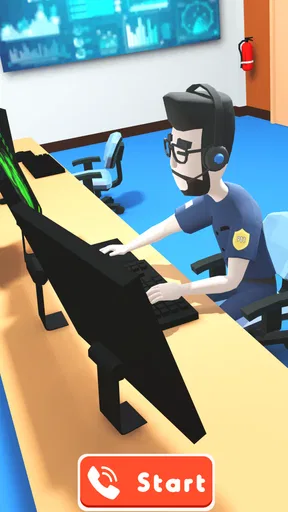
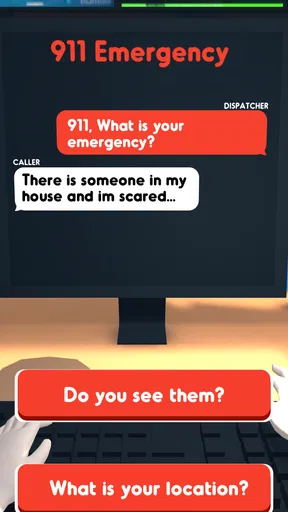
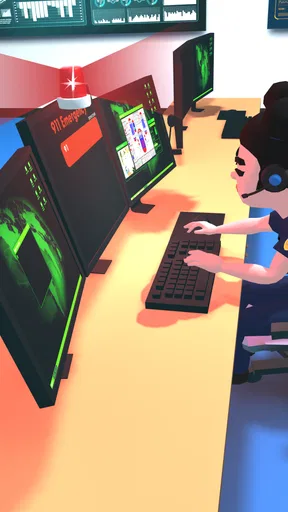
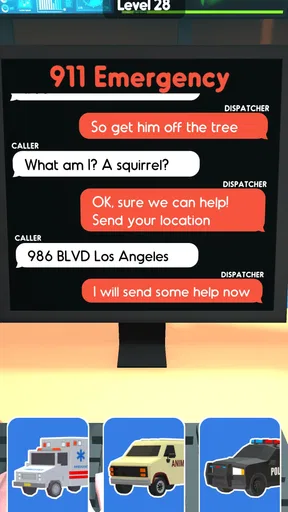
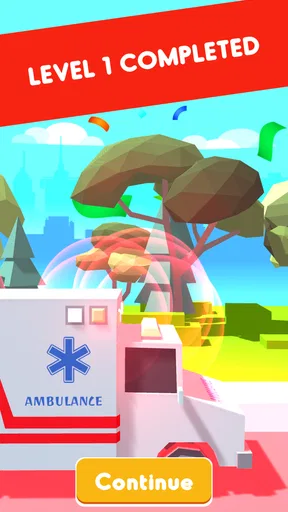
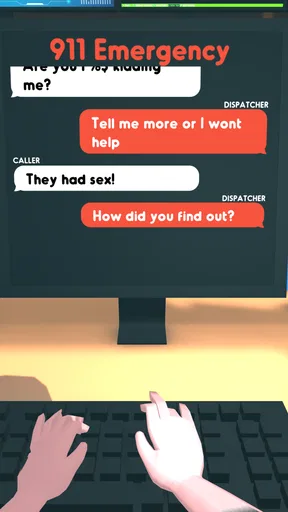
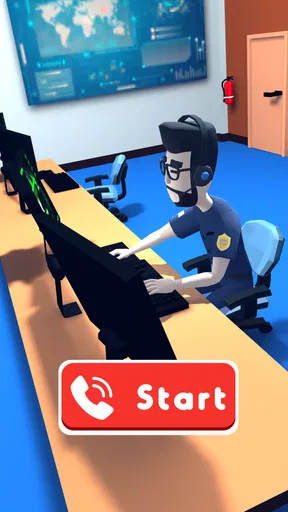
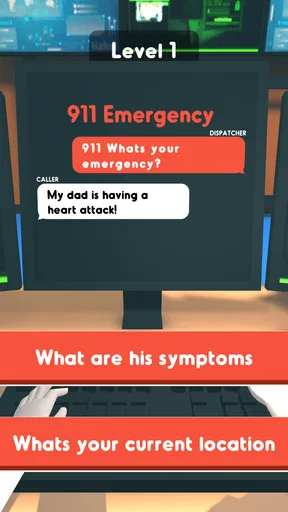
Our Review of 911 Emergency Dispatcher
 Analysis by Appyee
911 Emergency Dispatcher is a role-playing game from Supersonic Studios LTD that puts me behind the desk rather than in the ambulance. Its basic idea is easy to understand: I respond to emergency situations, decide what help is needed, and try to make sensible choices while the pressure builds. That makes it appealing if you enjoy quick decisions and light simulation, but it is also important to approach it as entertainment rather than as a realistic emergency-service training tool.
I found the concept more interesting than a conventional action game because the central challenge is judgment. There is no need to run through a city or fight enemies directly. Instead, the game asks me to pay attention, choose a response, and live with the result. That slower, decision-focused angle gives it a different feel from many role-playing games, even though it still uses the familiar idea of progressing through situations and becoming more capable over time.
How the emergency-dispatch role works in practice
The strongest part of the experience is the change in perspective. Most emergency games focus on the person at the scene, while this one makes the dispatcher the important link between a problem and the services that can respond. I liked that setup because it turns a simple tap into a small prioritization exercise. The question is not only what happened, but also what should happen next.
That makes each scenario work best when I slow down enough to read the situation instead of tapping through automatically. A useful habit is to identify the immediate danger first, then consider which kind of assistance fits it. This sounds obvious, but the game’s appeal comes from repeating that process under different circumstances. I found it more satisfying when I treated every call as a short problem to solve rather than as a sequence of buttons to clear.
The role-playing structure also gives the decisions a sense of continuity. I am not simply completing isolated mini-games with no connection between them. The dispatcher identity provides a reason to keep going, and the emergency theme gives the progression a clear direction. Players who enjoy games built around choices, upgrades, and repeated short sessions will probably understand the appeal quickly.
At the same time, the presentation is designed for casual mobile play. I would not compare it directly with a detailed PC management simulator or a serious professional dispatch program. Those alternatives can offer deeper systems, longer planning, and more demanding realism. This game is better understood as an accessible interpretation of emergency coordination, made for picking up the phone and playing in short bursts.
What I would do during a typical session
Imagine having a few minutes while waiting for a train. I can open the game, handle several situations, and close it without needing to remember a complicated control scheme. The useful rhythm is to read, decide, observe the result, and move on. That makes it suitable for short breaks, although the repeated structure may feel less compelling if I want a long, story-heavy session.
My practical tip is to avoid treating speed as the only goal. When I rushed, the experience became a guessing exercise. When I paid attention to the wording of a situation and matched the response more carefully, the dispatcher fantasy worked much better. This is one of the game’s less obvious strengths: it rewards a small amount of concentration, even though the controls remain simple.
Another worthwhile approach is to use the early situations to learn the game’s logic instead of trying to optimize immediately. The first instinct may be to send the most powerful response every time, but that can remove the interesting part of the decision. Thinking about proportional help makes the game feel more like dispatching and less like selecting the biggest available option.
Free access and what the purchases mean
The game is free to download, so I can try its central idea without paying before I know whether the format suits me. That matters here because the appeal is quite specific. Someone who enjoys the dispatcher fantasy may want to continue, while someone looking for direct action may discover within a short session that the decision-making pace is not enough.
Optional in-app purchases are listed at between $2.99 and $4.99 per item. I see that as a reason to test the free experience first rather than buying impulsively. The free entry point gives the game a fair chance to prove its value, while the purchase range is clear enough for me to recognize that continuing to spend can become a personal choice rather than a requirement for everyone.
I would judge the paid value by asking one question: does the game remain enjoyable when I play it at its natural pace? If the answer is yes, an optional purchase may feel reasonable to a committed player. If the answer is no, paying will not fix the basic mismatch between the game’s style and my preferences. The safest value decision is to play first, then spend only if the core dispatch loop already feels satisfying.
That distinction is especially important for families. The game is free to start, but the presence of purchases means I would check device purchase settings before handing it to a child. Its content rating is Everyone 10+, so it is aimed at a broad audience with some age guidance, but the emergency subject matter may still be more intense for younger players than the label alone suggests.
Where the game delivers real value
The main value is not realism in the professional sense. It is the compact decision-making loop. I get a game about responsibility, prioritization, and consequences without needing to learn a large map or memorize a complex control system. That makes it approachable for people who like simulation ideas but do not want a demanding management interface.
It also offers a useful change of pace from role-playing games built around combat. If I am tired of controlling a hero through battles, the dispatcher role gives me a different kind of tension. The satisfaction comes from making the right call, not from improving aim or defeating an opponent. That difference is enough to make it worthwhile as a secondary game on a phone.
There is educational value in a limited, informal sense: it can encourage players to think about matching a response to a problem and about the importance of clear information. I would not use it to learn real emergency procedures, though. The game simplifies the work to make it playable, and that simplification is part of its entertainment value.
The game’s popularity is also easy to understand. It has passed 10 million installs and holds a 4.6 average from roughly 277 thousand ratings, with about 13 thousand written reviews. Those figures suggest that the concept has reached a large mobile audience, but they do not replace personal testing. A popular game can still be the wrong fit if I want richer storytelling, realistic communications, or more control over every operational detail.
The tradeoffs I noticed after playing
The biggest limitation is the gap between the dramatic subject and the simplified interaction. Emergency dispatch sounds like a profession full of complex communication, uncertainty, and coordination. A mobile game needs to reduce that complexity, but players expecting a serious simulation may find the result too light. I enjoyed the theme more when I accepted that it was a casual role-playing interpretation rather than a complete dispatch model.
Repetition is another consideration. The basic rhythm of receiving a situation and choosing a response is clear and accessible, but that same clarity can become predictable. I would recommend it more strongly to someone who likes repeated short challenges than to someone who needs constant mechanical variety. If I want a game that keeps introducing entirely new systems, this may not hold my attention for as long.
The absence of direct physical action is both a strength and a weakness. It lets the game stand apart from emergency-response action titles, but it also means there is less visual excitement. Players who expect sirens, driving, exploration, or hands-on rescue work should choose a game built around those activities instead. Here, the dispatcher’s distance from the scene is the point.
There is also a tradeoff between accessibility and depth. Simple controls make the game comfortable on a phone and easy to understand, but they leave less room for the kind of detailed planning found in a full strategy title. I would rather have this compact design during a short break, while I would choose a deeper simulator when I have time to manage multiple systems carefully.
Version 1.084 is the current version, and the game supports devices running Android 7.0 or later. That makes it relevant to people using older compatible Android phones, although the actual comfort of play will still depend on the device and the player’s tolerance for mobile-game repetition. The game was released on March 12, 2021, so it is not a brand-new concept, but its central role remains distinctive enough to stand out among casual role-playing options.
Who should play it, and who should skip it
I would recommend 911 Emergency Dispatcher to players who enjoy choice-driven mobile games, light simulation, and short sessions with a clear objective. It is particularly suitable if I like the idea of being the person who coordinates help rather than the person who performs the rescue directly. The game can also work for someone looking for a calmer alternative to combat-focused role-playing games.
It is a reasonable choice for a curious player who does not want to commit money immediately. The free starting point lets me test the interaction, and the purchase prices of $2.99 to $4.99 per item are visible before I decide whether the game deserves further spending. I would still keep purchases controlled, especially on a shared family device.
I would skip it if my priority is authentic emergency training. The game can make the dispatcher perspective interesting, but entertainment shortcuts are not a substitute for official instruction. I would also skip it if I need a large role-playing world, deep character development, or a long campaign with extensive exploration. The appeal is concentrated in the call-handling decision loop, not in those broader features.
Compared with a typical emergency action game, this one is better for players who prefer planning over movement. Compared with a traditional role-playing game, it offers less combat and world exploration but a more unusual professional role. Compared with a serious management simulator, it is easier to start and better suited to casual play, though it does not provide the same depth. Those comparisons helped me place it correctly: it is a focused mobile game, not an all-purpose emergency simulation.
My buying decision after testing the value
My recommendation is to try the free version if the dispatcher premise genuinely interests you. The game has a clear identity, a friendly entry point, and enough decision-making to make short sessions feel purposeful. I especially enjoyed it when I approached each call as a small reasoning task instead of rushing to finish a list of events.
I would not recommend spending immediately just because the theme sounds realistic. The purchase value depends on whether the simplified loop stays enjoyable after the initial novelty fades. Since the game is free to start, there is little reason to guess. Play it normally, notice whether you want another session, and only then consider an optional item.
For me, the final verdict is positive but specific. 911 Emergency Dispatcher is a good casual role-playing game for people who want to make emergency decisions from a dispatcher’s viewpoint. It is not the right choice for deep simulation fans, action seekers, or anyone looking for professional training. If you enjoy its measured pace and accept its simplified systems, it delivers a distinctive mobile experience without requiring an upfront purchase.
Supersonic Studios LTD has built the game around a premise that is immediately recognizable but not commonly used as the player’s role. That perspective is its lasting advantage. I would keep it installed for short, focused sessions, recommend it to a friend who likes unusual simulation concepts, and describe the purchases as optional rather than essential. In other words, it is worth trying for free, worth continuing for the right player, and easy to skip when the dispatcher role itself does not appeal.
Verdict
Strengths of 911 Emergency Dispatcher
- Realistic emergency scenarios test quick thinking and prioritization skills.
- Simple controls make the game easy to learn and play on mobile devices.
- Different call types keep the dispatcher role varied and engaging.
- Short sessions are convenient for casual play during breaks.
- The emergency theme creates a strong sense of urgency and immersion.
Limitations of 911 Emergency Dispatcher
- Some scenarios may feel repetitive after extended play.
- Fast decisions can be frustrating when mistakes end a call quickly.
- The game may oversimplify real emergency response procedures.
- Progression can feel limited once the main situations are familiar.
- Frequent ads may interrupt gameplay for players using the free version.
Other Releases by Supersonic Studios LTD
View All


Similar Picks in This Category
View All
Hair Dye
CrazyLabs LTD4.4

Monster High™ Beauty Salon
CrazyLabs LTD4.5

Bus Simulator - Bus Games 3D
Jima Apps4.4

Flight Pilot: 3D Simulator
Wildlife Studios4.1


Super Stylist Fashion Makeover
CrazyLabs LTD4.4
Frequently Asked Questions
What is 911 Emergency Dispatcher about?
911 Emergency Dispatcher is a simulation game in which you take the role of an emergency call operator. You answer incoming calls, listen carefully to each situation, ask or select appropriate questions, and decide which emergency services should respond. Your choices can affect the outcome, so the game combines quick decision-making with a simple story-driven progression system.
How does the gameplay work?
The gameplay is based mainly on responding to emergency calls and choosing the most suitable answers from the options shown on screen. You may need to identify whether a situation requires police, firefighters, medical assistance, or another response. Each scenario is designed to test your attention and judgment, while successful decisions help you progress through additional calls and assignments.
Is 911 Emergency Dispatcher suitable for children?
The game is easy to understand and does not require advanced gaming skills, but parents should still review its content before allowing younger children to play. Some calls involve accidents, danger, crime, or medical emergencies, which may be unsettling for sensitive players. The recommended age rating, available on the relevant app store, should also be checked before downloading.
Does 911 Emergency Dispatcher require an internet connection?
The core experience may be playable without a constant internet connection, depending on the version installed and the device being used. However, an internet connection can be required for advertisements, optional rewards, updates, analytics, or in-app purchases. If you plan to play offline, it is best to test the game after installation and check its current store listing.
Is 911 Emergency Dispatcher free to download and play?
911 Emergency Dispatcher is generally offered as a free download, allowing players to try the main gameplay without paying upfront. Like many free mobile games, it may include advertisements, optional purchases, or paid features that can speed up progress or remove ads. Before downloading, review the store page and your device’s purchase settings to avoid unexpected charges.
Play our best games!


